· Agricultural robotics
In developmentHow Farm Bot works
Follow the planned route from a plant to a receiving station. Each stage gives a grower a concrete way to judge whether the robot helped.
Electric actuation · Form study
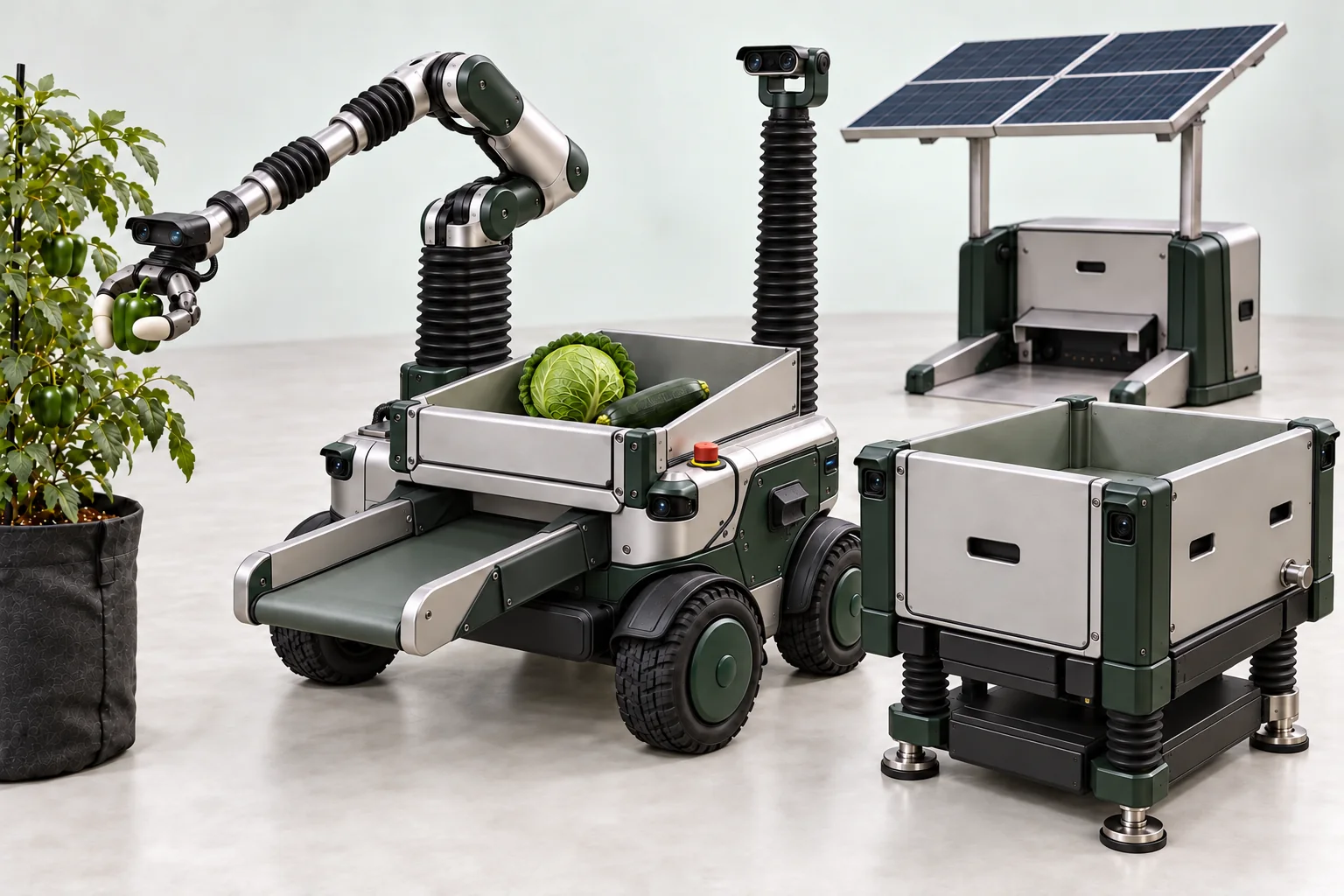
A robot. A harvest station. A solar dock. One connected system in development.
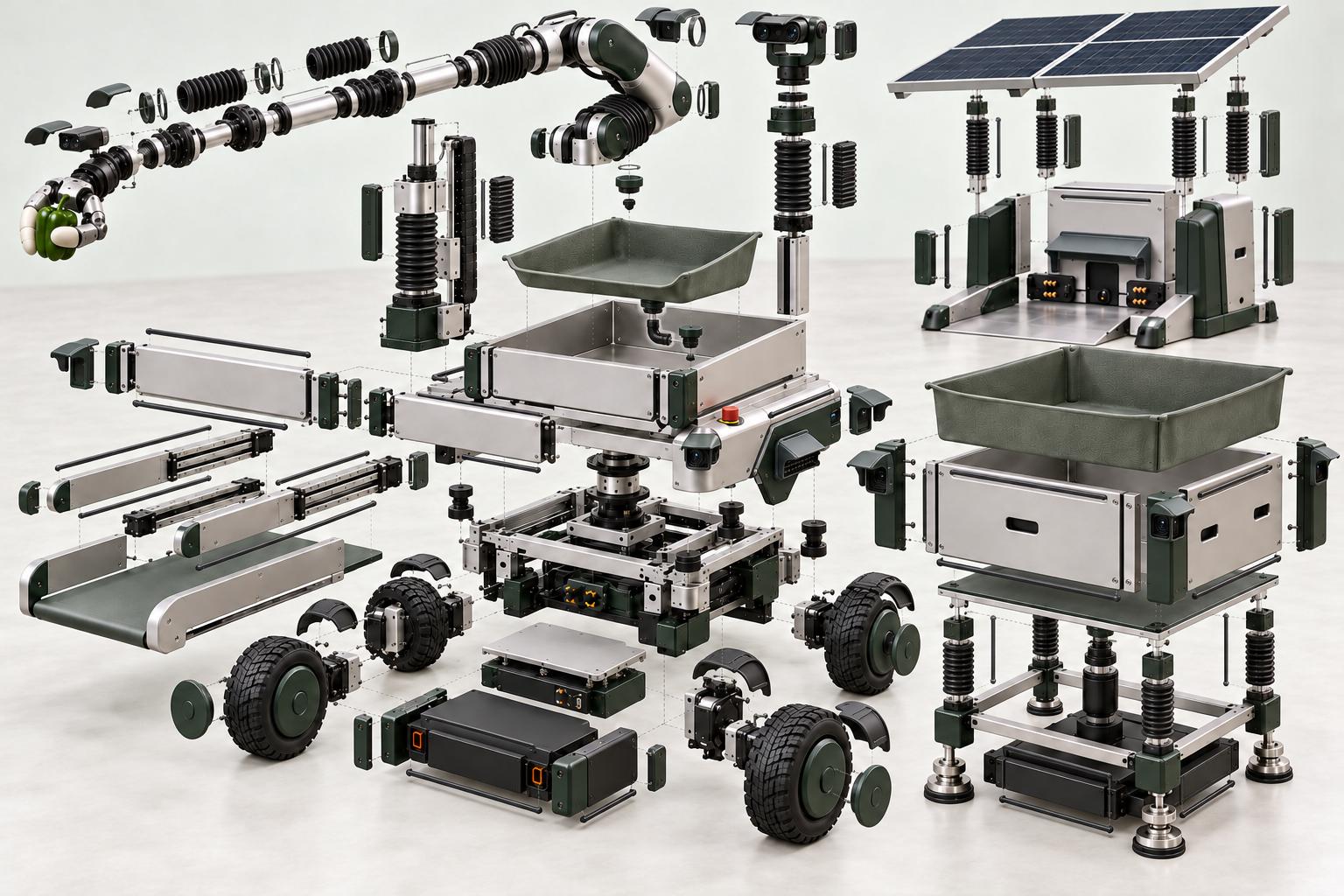
The system
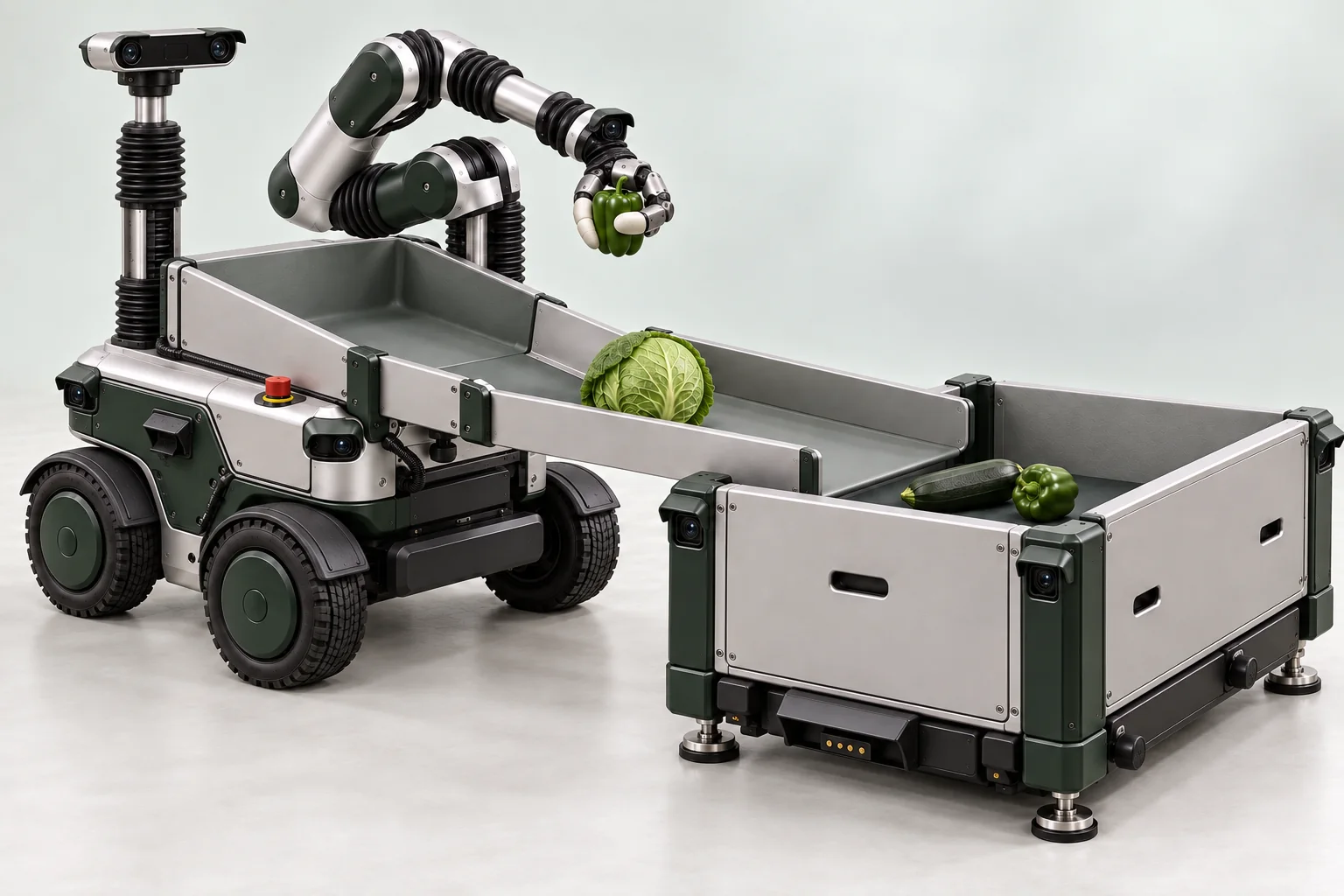
A receiving bin that could follow the robot
The images show the original receiving bin. We are exploring a separate version on powered wheels, with cameras and onboard controls to follow the harvester. It would park before unloading and stop if it lost sight of the robot. This option is outside the current design and price target.
Reach the plant
A four-wheel base would bring a vertical lift and extending arm alongside the planter. The rear camera mast would rise above the arm to keep the surroundings in view. A camera on top of the hand would guide the fingers. The rear camera would help the robot spot obstacles.
Decide whether to pick
The intended crop model would estimate readiness. A grower could check its decisions against what ripens next. Picking too early and leaving ripe food behind are different errors to measure.
Bring the harvest back
The hand would place vegetables in the robot’s basket. A powered belt would carry them into a larger bin. The basket would stay on the robot. A field trial would measure damage and weigh the usable harvest.
Return to the dock
The robot is intended to return and dock on its own. Solar panels would recharge the station’s battery. The station would then charge the robot’s onboard battery through the dock. Trials must verify alignment, safe charging and operating time outdoors.
Design views